Q&A
A Conversation with Jason Dymbort
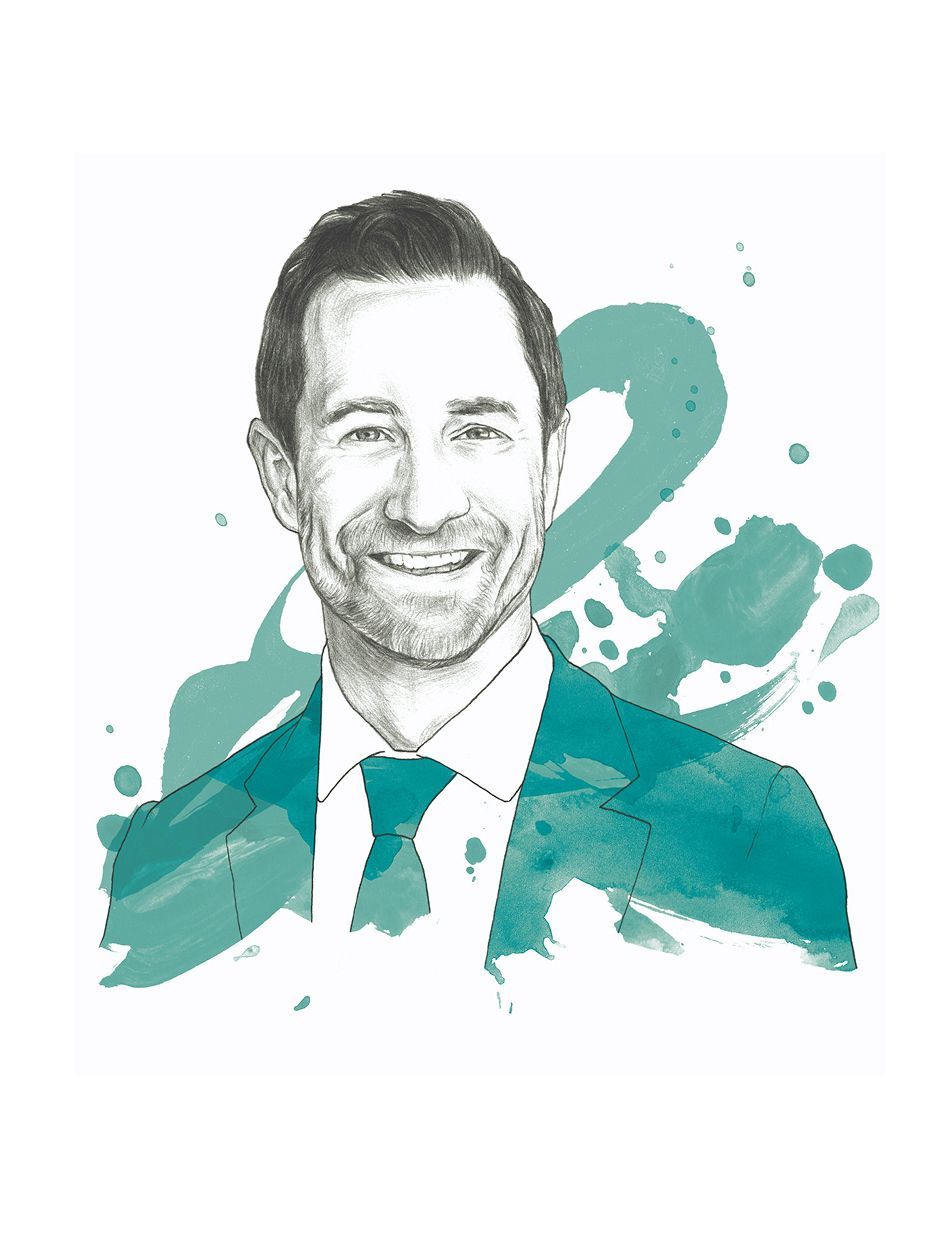
Jason Dymbort is the Executive Vice President, General Counsel and Secretary at First Solar, Inc. He started at First Solar in 2008 and was previously the General Counsel – Americas (contemporaneously serving as General Counsel and Secretary for the general partner of 8point3 Energy Partners, then a publicly traded yieldco and affiliate of First Solar), Assistant General Counsel and Senior Counsel at the company.
Let’s talk a bit about your role and responsibilities...
What do you enjoy most about your job?
What I’m most grateful for about this job is that it is a pretty close proximation of the kind of professional role I aspired to when I was growing up. I certainly didn’t have the specifics as a boy, but I at least recognized that I wanted to have significant responsibility for something important in this world, whatever that may be.
There is plenty of responsibility that comes with serving as the General Counsel of an S&P 500 company that is the leading solar module manufacturer in the Western Hemisphere, supplying the semi-conductor engine for the most cost-effective, fastest to commission utility-scale energy generation source, which is also responsible for creating about 30,000 direct and indirect American manufacturing, supply chain, logistics and other U.S.-based jobs that yield $2.8 billion in annual aggregate U.S. labor income.
What are some of the typical matters that come across your desk?
I’m not sure “typical” is a word that applies to the particular industry I’m a part of: they call it the “solar coaster” for a reason, since seemingly every few months the dynamics impacting solar manufacturing change materially one way or the other. I, of course, have the usual GC scope: deals, litigation, intellectual property, supply chain, trade and public policy, board support, public company securities matters, compliance, etc. But the issues and challenges and opportunities that arise within those areas change all the time, driven by constantly evolving factors, including geopolitical events, domestic and international trade policies, and the localization of demand, manufacturing supply and value chains, as well as the trade practices and strategies of our competitors and certain foreign governments.
How has the scope of your work changed from the time that you started until now?
When I started at the company, the only real value I could deliver was based on my Cravath corporate law training, which was tremendous given both the Firm’s philosophy and approach to training associates as well as the explosive state of the economy when I was a young associate, which was generating an enormous deal flow that provided ample opportunities for a young lawyer to exercise that training.
Today—within any practice area—I’m probably the worst lawyer in the First Solar legal department from a technical standpoint. But I think (I hope!) I’ve developed new attributes—such as leadership, strategic thinking, collaboration and communication skills—that I think (I hope!) add some amount of value to the goals and direction of this great company.
What are some of the new (or unexpected) challenges you’ve had to prepare for and solve?
The trade and public policy arenas have probably presented the most exciting opportunities from a personal growth standpoint, and more importantly, some of the most consequential opportunities for the recent advancement of First Solar. The outcome of the One Big Beautiful Bill Act was pivotal to the company and afforded me a number of opportunities to apply my legal and executive leadership skills, from advocating for legislative provisions and forming coalitions to meeting with senior legislative and executive branch politicians and members of their staff.
Over the last five years or so, I’ve also had significant exposure on the trade law side, where First Solar has been at the forefront of ensuring American manufacturers such as FSLR have the ability to compete on the basis of their merits, on a level playing field, in the face of the relentless commercial practices of certain state-sponsored competitors.
Going back to law school, walk us through your path in the legal industry so far...
Did you always want to be a lawyer working in the corporate space?
Yes, but not because I necessarily wanted to be a corporate lawyer. I grew up—and I’m grateful for this, because there was an irreplaceable education in it—a lower middle-class Brooklyn public school kid who aspired to have some part in some place of meaning in the world. Being a corporate lawyer seemed to be the best path back to achieve that ambition then, but probably for superficial reasons.
My best friend’s father, a man I greatly admire (I very much love my parents, too) was a corporate lawyer: he was a distinguished man; he wore a suit; he commuted to a skyrise office building in Manhattan. I had absolutely no idea what he did once he got to that office, but whatever it was, it looked important. I decided that would be my path, especially since the job of being Bruce Springsteen was already taken.
Who are some of the mentors that left the biggest impression on you?
I’ve developed a philosophy over time that there is something to learn from almost every person you meet who willingly or even unknowingly expresses themselves; all you have to do is listen or observe what they are saying or doing, and find the lessons embedded in those actions. So, I guess I’ve had all sorts of “mentors” who didn’t know they were mentoring me. I also am greatly inspired by my paternal grandparents, who were both Holocaust survivors: what it took for them to emerge from that is a constant reminder to me that I have no excuses when it comes to finding strength and determination in the face of the comparatively insignificant challenges I encounter.
Thinking more in-depth about your time at Cravath...
What do you remember most about being at the Firm—are there any particular moments that stand out to you?
Tons, since given the tremendous deal flow that existed during my Cravath tenure, when I was at the Firm, I was always at the Firm. My favorite memory is the incredible bond shared with a subset of my fellow corporate classmates on the 36th floor of the old building at 825 Eighth Avenue. Rich Hossfeld, Maggie Melikjanian, Rene Paula, Travis Rundlet—and of course, Joe Zavaglia, who by making partner is the last one standing from our corporate class—will stay with me forever. This was an ethnic, racial, religious and gender diverse group of people who were, and in my heart still are, my brothers and sisters.
What do you tell people when they ask what it was like to work at Cravath?
That it was the greatest post-graduate education a lawyer could get. That I learned how to be a lawyer because of Cravath; that I learned how to conduct myself as a professional because of Cravath; that I grew up from being someone who required express praise for their personal sense of worth to discovering that consistently being asked to contribute to the organization was the ultimate professional compliment and source of self-confidence. Whoever I may be, there is no way—no chance—I am the current version of the person I am without the professional and personal growth I experienced at Cravath, Swaine & Moore LLP. I’m grateful for it.
How does the experience you gained as an associate still influence or impact you today?
To answer this, I’ll tell you a quick story. As a second- or third-year associate, I was given the chance to lead a transaction, probably not because I was all that good, but because there just weren’t enough associates to lead deals. I ran into then-partner Alan Stephenson, who I remember having tremendous executive presence with what appeared to me to be a gruff exterior, which admittedly at the time intimidated me. But I also sensed a kindness to him. So, I told him about the deal, the fact I never led one before, and asked him if he had any advice. He looked down at me—he was much more physically substantial than I was—and (I’ll paraphrase), said: “Son, my advice is that you don’t [screw] this up.” I’ve said exactly those words to myself as I walk into work nearly every day since.
What is the most valuable training you received, or skill you developed?
Transactional skills are probably the most valuable skill I learned, because possessing those increased my marketability as my career progressed. In the end, no matter what the deal is, almost all of them have reps, warranties, covenants, indemnities, and the like, and I was exposed to innumerable pages of those provisions during my time at Cravath.
But I also was trained to develop the instinct to identify what I don’t know or what I might be missing. As a GC, you’re never going to master the entire technical breadth of every practice area; the scope of the job is just too big. I credit Cravath for developing in me the skill, and the courage, to identify potential issues, ask questions from those who are better placed than I to address them, and, especially, to sometimes challenge the answers to those questions, which has served me well in my current role.
Reflecting on taking those next steps in your career…
What were some of the motivating factors in your decision to go in-house?
I knew I didn’t have what it took to be a Cravath partner, and I wasn’t interested in going to any other law firm to make partner. I think I had the brains and the stamina to achieve partnership, but what I lacked was the drive to have a lifelong career as an outside advisor to a wide variety of clients. And I don’t care how much money you are able to make—if you don’t have the drive for your role and what you’re doing on a day-to-day basis, you’re either not going to last long or you’re going to be consistently unhappy doing it.
I recognized a few years into my Cravath tenure that I wanted to be at a manufacturer. I can’t say exactly why, but the idea of applying my skillset, whatever that might be, to a company that made a product, could be my specific place in the world. That opportunity is exactly what I’ve found at First Solar for the past 17 years.
What has been the biggest difference between law firm life and your current role?
Lots. The obvious one is that I now am part of an executive leadership team that helps our CEO run the company, focusing not just on legal issues, but on all manner of areas; leadership of that kind was not the role as a young associate at Cravath. I probably work harder today than I did then—I (and I don’t mean this positively) almost never stop thinking about work somewhere in the recesses of my mind—but I have greater control of my time.
What can you say about having worked with Cravath from the client or opposing counsel side?
Cravath has been the lead external corporate counsel of First Solar since its 2006 IPO. Every one of my four First Solar General Counsel predecessors has maintained that relationship, and it was an easy call for me when I took on the role to continue the engagement. Lots of law firms have very skilled lawyers; few of them invest in the relationship with the client the way Cravath does, gives the client the feeling that your outcome is their outcome, and that makes the difference.
For example, during my tenure, in addition to providing thorough, thoughtful, and timely advice, I know Joe Zavaglia will take on First Solar’s challenges with the same rigor as though they were his own. For two years, Lauren Rosenberg and Karin DeMasi delivered two successful motions to dismiss on a significant securities class action we defended. These days, rarely does a day go by where I’m not engaging with Dave Kappos, Keith Hummel or another member of the Firm’s IP team. Lots of different names, but across the board, they share a commitment to accuracy, excellence, strategic thinking and outcomes, reflecting Cravath’s unique culture and brand.
What advice would you give to young lawyers who are starting to think about or explore new opportunities?
I have discovered that to be successful you need two motivators: one, a selfish motivator, the second, a selfless motivator. If the next step in your career is driven, in part, by a desire for increased prestige, increased compensation, increased authority, or all of the above, there is nothing wrong with that. But those inward-facing goals by themselves are not, in my view, enough to make the next step in your career journey, or the step after that, sustainable and fulfilling, and if those are your only career drivers, my bet is you will almost certainly in the end fail in your ambitions. I’d encourage those young lawyers to also find outward-facing motivators. For me, I find that form of motivation in the pictures of the thousands of First Solar associates that hang on the walls of our offices and factories. When I see those pictures, I see someone’s father or mother, someone’s daughter or son, and I am reminded of the fact that, implicitly, to some degree, those associates are counting on me to make the right decisions for their company, for their jobs, for their futures as well as the futures of their families. I am a better lawyer and corporate officer because of it.
Is there anything you know now that you would tell your younger self?
I don’t think I fully appreciated the value of relationships and connections early in my career. I have since learned that professional excellence cannot be solely relied on for getting the chance to have a significant scope of responsibility for an organization; it needs to be coupled with some level of meaningful connection to those around you who also have this type of responsibility. Before I was promoted to the General Counsel role, a member of our Board of Directors said to me: “We know you can do the job; the question is, can we work with you?” What he was telling me was that I was relying too much on my resume and my body of work, and that I lacked the courage to reveal all that much about who I was as a person. I’d tell my younger self, and any young lawyer, to find that courage.
Fast Facts
- Education: University of Pennsylvania Carey Law School (J.D., 2004)
- Years at Cravath: 2004-2008 (Corporate Associate)
- Favorite Book: The Gold Coast by Nelson DeMille. I may have read it 10 times. I find a lot of my world view best expressed through the lenses of the main characters, John Sutter and Frank Bellarosa.
- In My Spare Time: The usual list, I suppose: working out; reading; and listening to music, or more precisely, Bruce Springsteen’s music, since for almost the entirety of my life that’s pretty much all I’ve really listened to.