Q&A
A Conversation with Rebecca Rettig

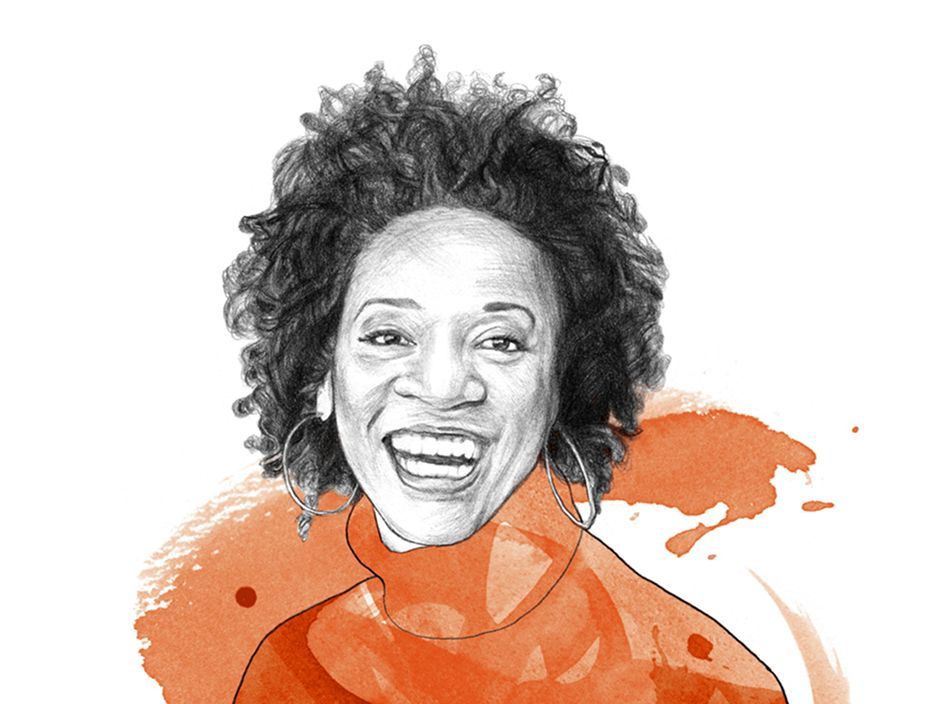
Rebecca Rettig is the Chief Operating Officer and Chief Legal Officer of Jito Labs, a technology startup that develops Solana blockchain software and infrastructure. She joined the company in January 2025.
Let’s talk a bit about your role and responsibilities…
What do you enjoy most about your job?
In many ways, what I enjoy most about my role at Jito Labs harkens back to what I did as an associate at Cravath. I enjoy being able to use lots of different skills on lots of different topic areas, relying on reasoning and logic to work my way through problems and issues. This includes how I organize my thoughts around the myriad topics that come across my desk every single day—which span some of the most complicated issues that one could possibly drum up.
One of the things I’m working on is the intersection of crypto and artificial intelligence, and how we can embed AI for our software engineers who are building out autonomous software systems. For me, the creativity that associates are afforded as generalists at Cravath resonated and translated into how I think about my job and find fulfillment in my work today.
What are some of the typical matters that come across your desk?
Top of mind right now for me are matters that touch on data privacy and protection, such as GDPR compliance related to collecting esoteric types of data; sweepstakes contests in relation to new consumer applications; and money transmission and sanctions issues, which are huge in our space.
I also think a lot about financial integrity, autonomous software systems and permissionless operating systems. It’s definitely a cutting-edge space because the majority of us are used to having intermediaries in everything we do, and when you don’t, you have to ask: Where and how do some of these laws and rules apply? Those sorts of questions occupy my every day.
How has the scope of your work changed from the time that you started until now?
I think it’s interesting to consider that shift as it relates to the transition from being outside counsel to being in-house counsel. I was a litigator while at Cravath, and I was dealing with clients who were in some sort of crisis or high-risk situation. Whereas, on the corporate side, you are giving business advice on high-impact issues.
When you’re in-house, though, you are looking at more routine issues—whether it be cross coordination between two entities or a SaaS agreement—things that seem small, but that could have an outsized impact on your business if you don’t address it correctly.
So, while as outside counsel you are frequently dealing with very large, strategic, high-impact issues only for a client, and you focus on that part of the client’s business, you don’t always see all the ripple effects.
When you’re in-house, you’re not triaging clients anymore. You’re triaging issues day to day because you only have one client, but that one client’s priority list may change and you’re able to observe every little ripple effect.
What are some of the new or unexpected challenges you’ve had to prepare for and solve?
Jito Labs has built some of the most complex software out there: high-frequency trading and landing software for blockchains. That’s just one piece of my job that also involves lots of complicated laws covering hosting software and other things which may touch our products, as well as financial integrity questions such as AML/CFT regulations and sanctions in the context of permissionless software systems. My job covers some very niche topics, but that is what makes it really great.
Going back to law school, walk us through your path in the legal industry so far…
Did you always want to be a lawyer?
Not from the time I was little, no. I was artistic as a child: I was a creative writer, painter and semiprofessional dancer from about 2 years old to the time I was 26. And I would actually say that the way I approach my job now is highly creative, because I’m in an area where there are some laws that are very clearly applied, and others that you have to interpret and figure out.
How would you describe the experiences and opportunities you’ve had as a clerk?
My advice is that if you’re a litigator, without question, you should definitely clerk. You should know how clerks and judges think about whatever you submit to them.
Clerking also made me less anxious as a litigator, because (1) I realized, “Oh, these are just people, too,” and (2) it really gives you the tools to figure out what is the most persuasive and what will work both when you’re live in court and when you’re putting something in front of the judge, submission‑wise.
Looking back, that experience also really gave me confidence in knowing that the way Cravath practices from a litigation perspective is very differentiated and very persuasive—so that was valuable perspective for me to have, too.
Who are some of the mentors that left the biggest impression on you?
Bud Shulman, who is now a long-retired Cravath partner, was an incredible mentor. He taught me how to write. It was a painful process, but it was also great. I’ve since written academic papers, op-eds, things like that, and I find that my ability to think through and piece together information in my writing is highly influenced by him. I have received a lot of compliments on my writing in this stage of my career, and I attribute all of that to Bud.
This is a fun story: Back in the day, partners would print stuff out and mark it up by hand, especially the senior partners. We’d be turning briefs over the weekend, and Bud would say, “OK, it’s ready and it’s with my doorman.” A lot of the times, people would just send a car up to get it.
But Bud and I lived maybe 20 to 30 blocks from one another, and I’m a runner. So I’d take my morning run over to Bud’s, get my brief, run back to my house, get ready for the office, and go in to turn the brief. My husband remembers those routine runs very fondly, too.
Thinking more in-depth about your time at Cravath…
What do you remember most about being at the Firm—are there any particular moments that stand out to you?
Honestly? The friends I made along the way, not to be super cheesy about it. I am still very close with the people in my summer associate class, including Noah Phillips (now a partner at Cravath) and Sophia Tawil (now general counsel). Noah and I ate dinner together every single night during one of the cases we worked; he was at my wedding, and I was at his wedding. Sophia and I had our kids together, and our oldest sons are best friends.
I also recall the dedication from the partners in training young lawyers. No matter how tough they were, you knew that if they were working you hard, they believed in you—that part of the Cravath culture was really nice and has stuck with me.
How does your time as an associate still influence or impact you today?
I’ll give you an anecdote: I was a young associate supporting Evan Chesler (now a retired partner) on a deposition in San Francisco, and I recall asking him why we, as litigators, don’t specialize.
And he said: “Because you should have the ability to lawyer any case that comes in front of you, and we teach you the skills and how to be a great lawyer. And then you apply them to the facts and the law.” That helped me think about being a lawyer as a skill or a trade, in some ways—and I know it is a profession, too, but Cravath really does give you that toolset. And that has honed how I think critically in every aspect of my life.
Reflecting on taking those next steps in your career…
What were some of the motivating factors in your decision to go in-house?
It was a right place, right time kind of thing, and I love being in-house; it really suits my personality. Being Chief Operating Officer fits, too—having a hand in all the organization, which I think I’m good at because I approach it from the law side.
What has been the biggest difference between law firm life and your current role?
I have become very involved in building out policy on the crypto side for the last six or seven years, really trying to take the principles that underlie our laws and figure out how we can manifest them or build them out for these new types of systems that our original laws weren’t contemplated for.
The difference for me is that when you are a practicing lawyer, you take what the law is and you deal with novel facts. Now, it’s somewhat similar in how you take what the law is and apply it to novel facts, but the law doesn’t really match up 1:1 with all of the new developments. With how fast AI and technology are developing, our laws can’t really keep up. And so, I certainly never envisioned being a policy person, but that is part of what I do and how a lot of people think of me now.
Is there anything you know now that you would tell your younger self?
I would tell myself that it’s all going to work out, and that it’s OK to be unconventional. Which you’re not taught to be as a lawyer, right? You learn there are rules and ways, and how the court sets things, and there are laws. But there is room to be unconventional as a lawyer, and I think that will set you apart.
I think the other thing lawyers don’t always do is take risks, and I did and it’s OK to do that too. I am more fulfilled in my career than I ever imagined I could be, having had experiences far beyond my wildest dreams. I also feel like I’m just getting started.
Fast Facts
- Education: Columbia Law School
- Years at Cravath: 2006-2007, 2008-2011, 2013-2017 (Litigation Associate)
- Favorite Book: A Little Life by Hanya Yanagihara. The book covers very difficult topics, but it’s so beautifully written.
- In My Spare Time: I run a lot, and I spend time with my friends and family.