Q&A
A Conversation with the Honorable LaShann DeArcy Hall
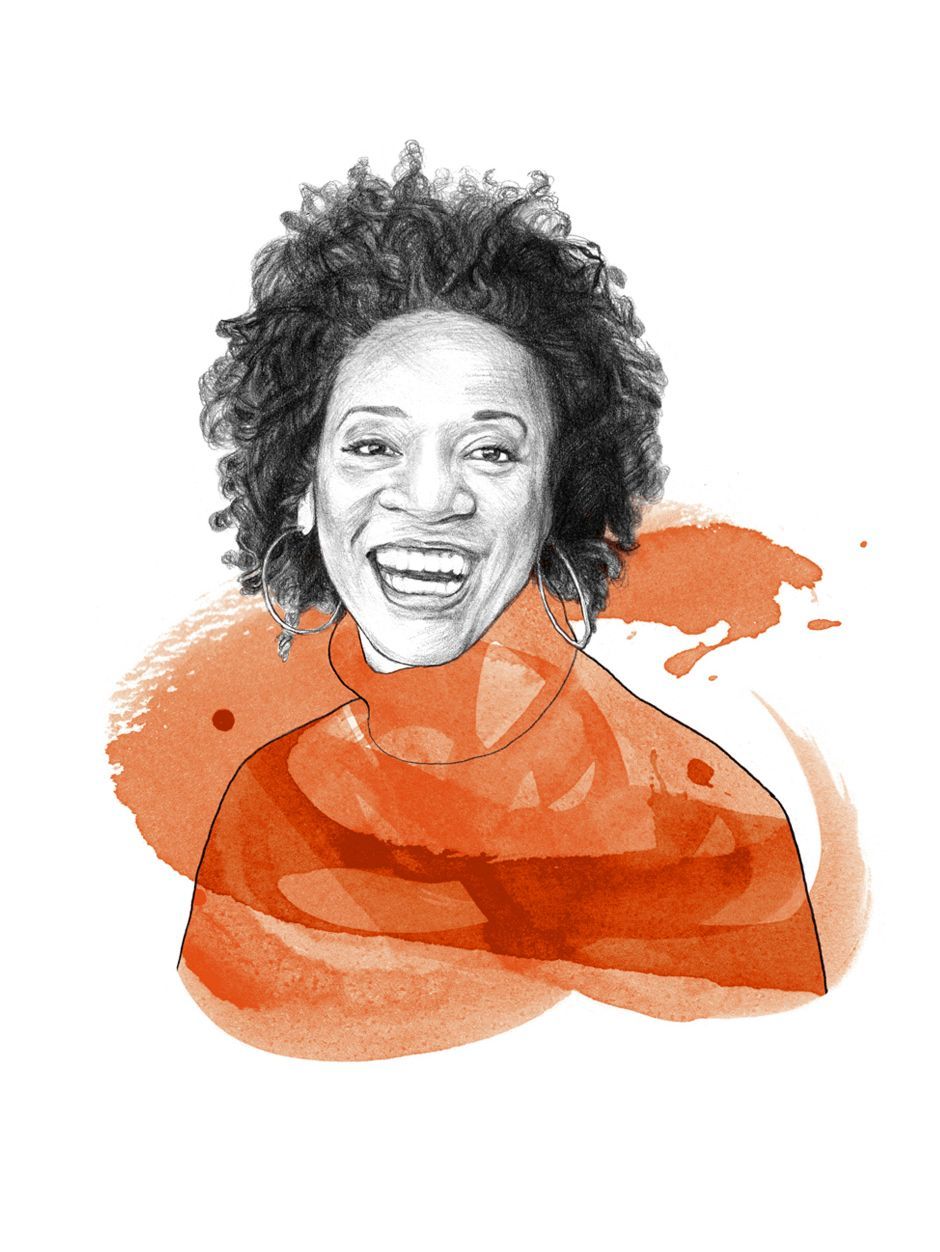
The Honorable LaShann DeArcy Hall is a United States District Court Judge for the Eastern District of New York. She received her commission to serve on November 17, 2015.
Let’s talk a bit about your role and responsibilities…
What do you enjoy most about your job?
I can’t pinpoint just one thing. The great thing about my job is that it allows me to do many of the things I enjoy. It is an intellectually rigorous job and I love that. It is one of the few occasions where you get to deal with the law in its purest form. That said, one specific thing I do love is the opportunity to have a direct impact on people’s lives. For example, in the criminal law context, there is an opportunity to work with defendants and potentially help guide them to a different path in life. This is most evident for me in our work with RAISE Court, our re-entry court. In fact, I would say my work with RAISE Court is one of the most rewarding experiences I have on the bench.
Going back to law school, walk us through your path in the legal industry so far…
Did you always want to be a lawyer?
It was probably in the sixth grade that I decided I wanted to be a lawyer or a dancer, and I’ve had the chance to do both. There was never a question that I wanted to be a litigator but being a judge was certainly not a goal of mine as a young lawyer. My goal as a young lawyer was to become good at what I do. Being a lawyer is a lot like being an artist; you need to hone your craft.
Who are some of the mentors that left the biggest impression on you?
There have been many mentors throughout my career. Mentors come in all forms and if you are paying attention you can learn from many people. One of the mentors I had early in my career at Cravath was Stu Gold. He was, as I’m sure everyone remembers, a tremendous lawyer. What everyone may not know is that Stu was also a tremendous teacher. I took my first deposition under Stu and when I was done, we sat down with the transcript of the deposition, and we went over it question by question. That was his approach with most everything we worked on together. I have embraced his approach as I work to mentor the young lawyers I work with today.
Thinking more in-depth about your time at Cravath…
What do you remember most about being at the Firm—are there any particular moments that stand out to you?
What I remember most about being at the Firm is that the standards at Cravath were exacting. My mom would say “unforgiving,” but I will leave it at exacting. But, what stands out about my time at Cravath is not a particular moment but rather the fact that I felt I was given as many opportunities as I proved myself capable of.
How does the experience you gained as an associate still influence or impact you today?
The experiences I gained as an associate made me careful, deliberate and thoughtful. I try to bring those traits to everything I do. In fact, I don’t think that exacting standard has waned in me, and, if you ask my clerks, I suspect they’ll agree.
Reflecting on taking those next steps in your career…
What has been the biggest difference between law firm life and your role as a judge today?
When you are an advocate, your job is to advocate for a particular position, and you use the law to chart a course to that destination. As a judge we are not told where we are meant to arrive. The only thing that guides you as a judge is the law. It can be challenging to figure out where it is you are meant to land but that is what makes it so exciting.
Did you seek out opportunities in civic engagement early in your career? Why?
Civic engagement has always been part of who I am. Prior to law school, I spent time as an enlisted member of the United States Air Force. I went to Howard University School of Law, where civic engagement is part of its legacy. Lawyers trained at Howard still seek to model the words of the great civil rights lawyer and former dean, Charles Hamilton Houston, who famously said, “A lawyer is either a social engineer or a parasite on society.”
Can you share a bit about your experiences as a commissioner on both the New York State Joint Commission on Public Ethics and New York City Taxi and Limousine Commission?
Both were exciting and different. I had not previously worked in local government and my roles on these commissions required me to tap into a different skillset than my work as an attorney required. In fact, I once characterized my role on JCOPE as my first quasi-judicial role. Ultimately, it served as a great opportunity to bridge what I do now with what I did as an attorney.
What advice would you give to young lawyers who are starting to think about or explore new opportunities?
I'd say three major things. First, make sure you captain your own professional ship. Second, raise your hand early and often. Third, don’t wait until you feel confident before you do something. You’re probably ready six months before you feel confident.
Fast Facts
Education: Howard University School of Law
Years at Cravath: 2000-2005 (Litigation Associate)
Favorite Book, Show or Movie: Veep
In My Spare Time: I exercise, dance, cook and spend time with my daughter.